
Clinging to Innocence
Maurice Sendak, Meghan Thee Stallion, the Elf on the Shelf, and fascism

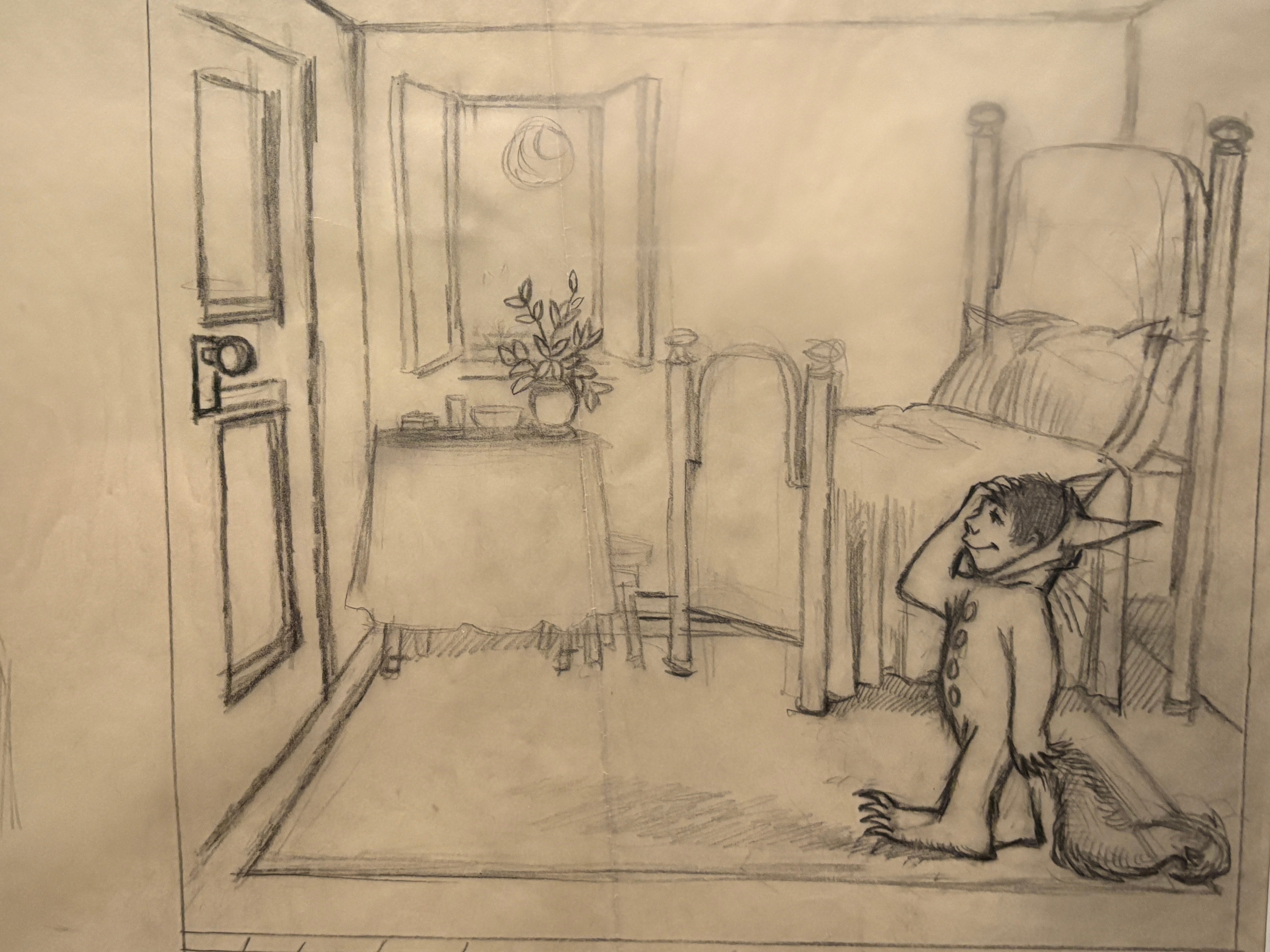
The Denver Art Museum currently has a special exhibit1 on the art of Maurice Sendak,2 author of Where the Wild Things Are and other children’s books.
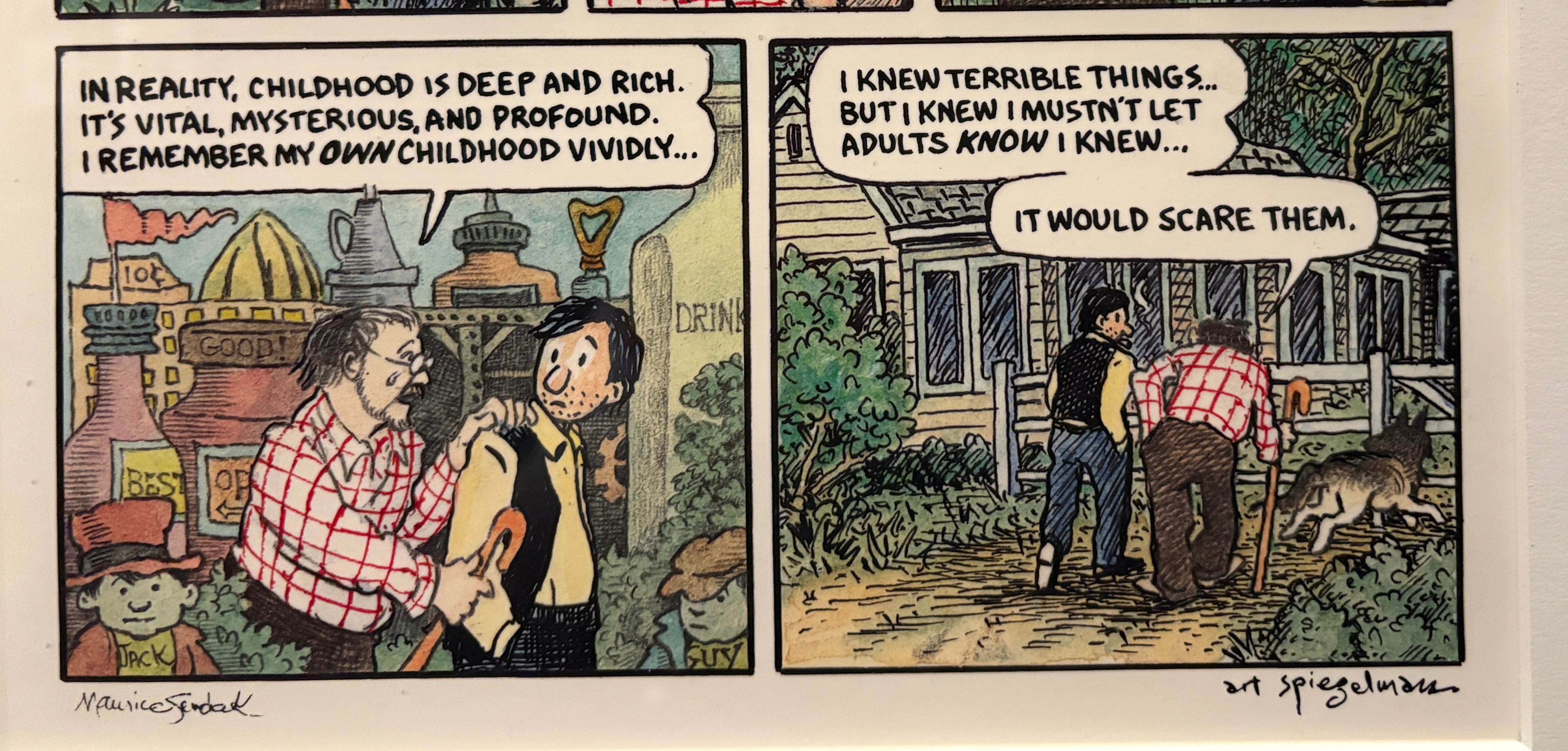
Toward the end of the exhibit, displayed in a white frame, was a familiar New Yorker comic, “In the Dumps,” that Sendak had co-created with Art Spiegelman.
Spiegelman is the author of Maus, a powerful graphic novel that tells his father’s story of surviving the Holocaust. The people are depicted as mice (Jews), cats (Nazis), and pigs (non-Jewish Poles and Germans). At the time they published the comic, in 1993, Sendak had recently written We Are All in the Dumps with Jack and Guy, an illustrated children’s book about the AIDS epidemic and homelessness.
Sendak and Spiegelman shared a willingness to look at heavy topics in their art.
The comic on display depicts a conversation between Sendak and Spiegelman about adults’ belief that children should be shielded from the horrors of the world. Spiegelman tells Sendak that his daughter thinks he draws mice, and that parents act as if letting their children read Maus is a form of child abuse.


Sendak replies, “Art – you can’t protect kids… they know everything.”
“In reality, childhood is deep and rich. It’s vital, mysterious, and profound. I remember my own childhood vividly… I knew terrible things… But I knew I mustn’t let adults know I knew… It would scare them.”
Do you remember that feeling from childhood? That you had to refrain from asking certain questions, or talking about certain things, because you wanted your parents to think you were more innocent than you actually were? I do.
The comic was familiar to me, because I had seen it before. My husband shared it with me the night we accidentally took our children to a Megan Thee Stallion concert.
How We Accidentally Took our Kids to a Megan Thee Stallion Concert (and Why We Don’t Regret It)
It was March 15, 2022. My husband was driving the girls (ages 7 and 9 at the time) to school in the morning when they heard on the radio that Dua Lipa was performing in Denver that same night. The girls loved Dua Lipa, their favorite musician at the time, and begged him to get tickets.
When he got home, we looked at ticket prices and debated whether it was worth getting last-minute tickets.
I was the voice of reason. I reminded everyone that it was a school night. We hadn’t been to live music performance in over two years, thanks to Covid, and even though we were all fully vaccinated and Covid had run through our whole family a few weeks before, I still wasn’t sure if we should be in a large indoor crowd yet. There were a lot of good, responsible reasons not to go.
But as it got closer to the start of the concert, and ticket prices dropped lower and lower, they talked me into it. We bought tickets over dinner, jumped in an Uber, and got to Ball Arena just as the concert was starting.
Little did we know (because clearly we didn’t do much research before buying tickets) that Megan Thee Stallion was the opening act. It turned out that she and Dua Lipa were debuting their duet, "Sweetest Pie," live at that concert.
I don’t know how familiar you are with the music of Megan Thee Stallion. She’s very talented! But her music isn’t exactly what most people would call “child friendly.” (If you don’t believe me, take a quick peek at her lyrics sometime. For now, let’s just say that “Sweetest Pie” isn’t a song about actual pie…)
I sat there with wide eyes, unsure what to do, as my children heard the explicit lyrics and watched her twerking in a thong and doing some very grown-up gestures with the microphone. My husband and I considered going out for snacks and coming back when Dua Lipa started, but we stayed. I’m not really sure why we stayed, but we did.
After the concert, as we waited outside for an Uber ride home, we talked to the kids about it. We discovered that they already knew what twerking was. They demonstrated twerking, right there on the sidewalk. We told them it’s not something they can go around doing. Especially at school - or their teachers would likely assume we were horrible parents. We told them we made a mistake, and that her performance wasn’t meant for kids. They already knew that, of course.
In a recent Substack post on watching adult TV shows with her children,
wrote about how, “we can try to shield our kids from adult content, but they are very likely to stumble across it anyway…. It can be hard, if not impossible, for kids to make sense of these issues on their own. And why would we want them to?” She writes that these kinds of moments hand us, “on a silver platter, endless opportunities for discussion and reflection on the challenges of growing up. Our kids greatly benefit from our help and our perspective — and from knowing, in their heads and their hearts, that we are there to listen and answer questions.”We wouldn’t have purposely taken kids that age to see Megan Thee Stallion perform, but we also didn’t regret it. The concert was one of the most exciting and spontaneous experiences we had that year. Dua Lipa’s performance was great, and the kids thought the concert was the coolest thing ever. We were all exhausted the next day but also exhilarated by the adventure. It was fun – really, really fun! And although uncomfortable at first, it felt life-affirming to be around a big group of people for the first time in years.
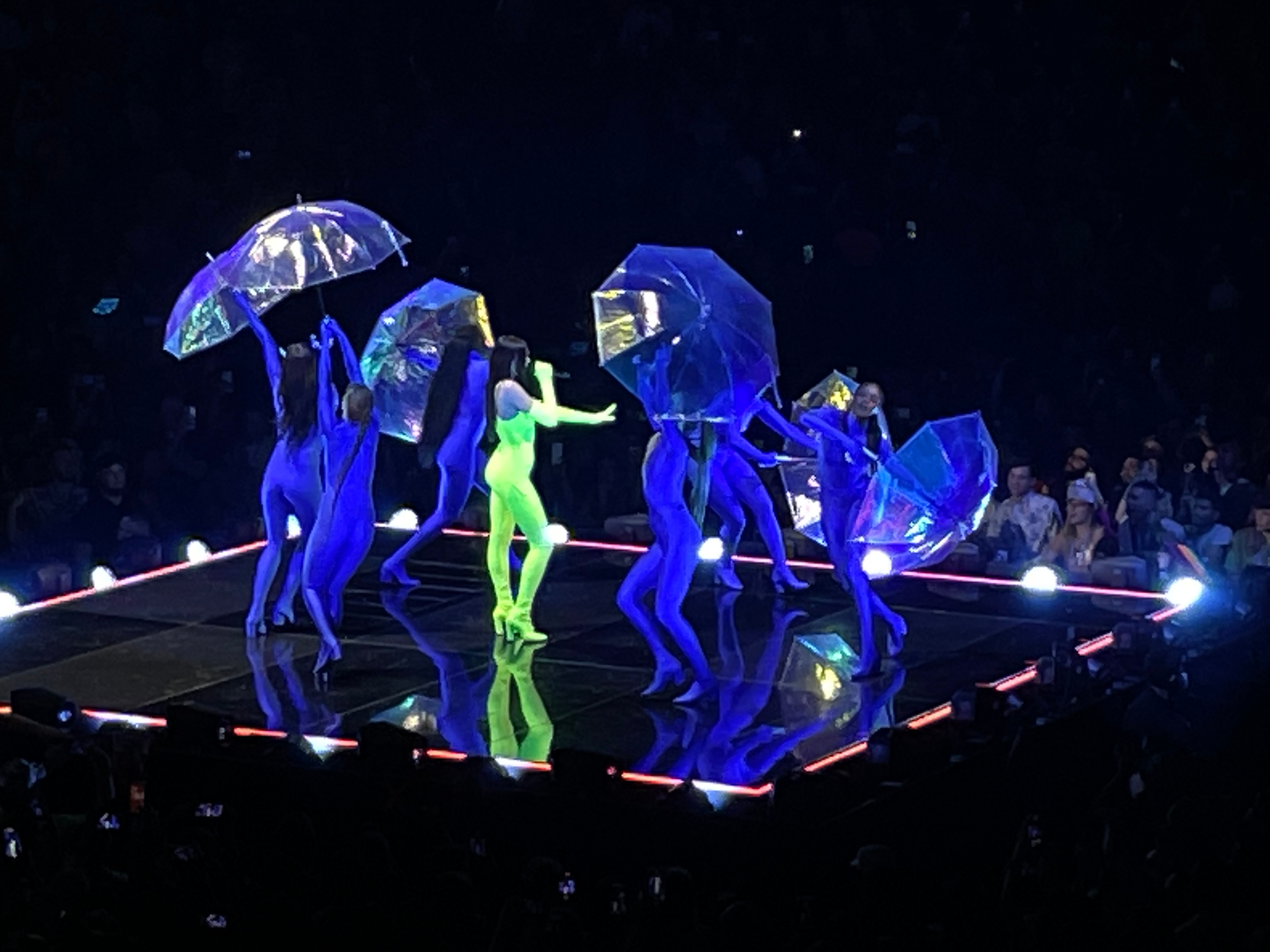
And, Megan Thee Stallion was memorable. Her performance led to some great conversations we didn’t expect to have with our kids, and it made us realize they can handle more than we think they can. Years later, it makes a funny story we still like to talk about.
The Elf on the Shelf: She Doesn’t Know that We Know She Knows
Now, my kids are 12 and 10 years old. They grew up celebrating Christmas, complete with Santa and the dreaded3 Elf on the Shelf.4
Our 12-year-old, now in middle school, has known the truth about Santa for a few years, and we talk openly about it. But with our 10-year-old, who is in 4th grade, we keep it going. She still puts out cookies and milk, and talks about what she wants from Santa for Christmas.
But here’s the thing. She knows. We can tell she knows, and her big sister has confirmed it. But she doesn’t know that we know she knows. So we don’t talk about it. It reminds me a lot of the “They don’t know that we know they know we know” scene in the TV show Friends - a good clip to watch any time you want to be impressed with the uniquely human ability to do complex social metacognition! (Except for Joey, apparently.)
And so, in our family the Santa illusion is still going for now - by an unspoken, mutually agreed-upon silence about the truth. (Although, there are cracks in the illusion. She had to drop a massive hint that all her friends’ elves were already on their shelves around December 6th, when ours still hadn’t shown up yet. And we’ve gotten a little careless when talking about who certain gifts and stocking stuffers came from.)
I’m not entirely sure why we all keep this illusion going. For her it might be the “if you believe, you will receive” concept - she might not realize that she’ll receive gifts anyway. Or maybe it’s like Sendak said. She mustn’t let the adults know… it would scare them. She’s trying to protect us from the end of her innocence.
On our end, I think it has something to do with a desire to keep the magic of childhood going, just a little bit longer. Because when she admits that she knows, Christmas will never be quite the same for our family ever again. The illusion of innocence will be gone.
A Small Red Paper from the Middle School
In my family, aside from a few mythical holiday beings, we tend to be honest with our kids about what’s happening in the world. We told them everything we knew about Covid from the beginning. They hear us complain and rant and be depressed about the state of the world. We want them to know about the reality of things like climate change and injustice.
They see us doomscrolling and stress eating. The other day it was white cheddar popcorn. I had eaten half the bag before I realized what I was doing.
We are open with them about our own anger, anxiety, uncertainty, and despair. We want them to know that we can handle these feelings, that we can face them. We don’t do toxic positivity in our house.
They hear us trying to figure out what we should do to try to make the world a better place. We don’t always know what makes a real difference, are uncertain what actions to focus on. We feel helpless sometimes and wish we could do more to make a positive difference in the state of the world.
My older daughter, the 12-year-old, goes to a very diverse middle school that is part of the Denver Public School system. They sent an email to the parents soon after the news that schools are no longer a sanctuary safe from immigration raids. There are a lot of immigrant children at the school, and the educators are trying to keep them safe, while remaining politically neutral and diplomatic.
I can only imagine how terrifying this must be for those kids and their families… how much courage it takes for those parents to send their kids to school each morning.
A few days after we received that email, my daughter came home with a small, red paper5, which citizens and non-citizens alike can give to immigration officials if they are ever stopped. It states, in both English and Spanish, that they are using their constitutional right not to talk to immigration officials or give them documents, and/or their constitutional right to deny them entry into their homes.
We were glad she got that red paper. We want our kids to know what to do if immigration officials come to their school and try to take their classmates away, potentially separating them from their families. We talked to her about how important it is for her to stand up for her friends.
I don’t know yet how likely this is to happen at her school. It’s too horrible to think about, even for me, an adult. But here we are, faced with the very real possibility that it could. I think of the German citizens who went along with the inhumane actions of the Nazis. How do we not be like that? How do we teach our kids not to?
Part of me would love to pretend like this isn’t happening, to look away from the horrors of the world. But we can’t do that.
Facing the Reality of This Political Moment
After the Sendak exhibit, I pulled my copies of Maus I and Maus II, which I read many years ago, off the bookshelf. It seems like good timing to read about fascism.
My younger daughter saw it and asked if she could read it. She is aware that it’s about the Holocaust, we’ve talked about it.
“Yes,” I said. “You can. You should read it. It’s important for you to learn about what happened.”
She responded, “I want to read it, but I also don’t want to. It sounds sad.” I hear you, kiddo!
Reading is one way I’m coping with this current political moment… Several times each day, I log on to check the news and read opinion pieces. I discover new horrors every time. I’m also reading books. Revisiting books like Maus and On Tyranny. I recently read Doppelganger by
, which was recommended to me by my friend and colleague , and more recently started reading one of Klein’s older books, The Shock Doctrine. I’m kind of obsessed with Naomi Klein’s work right now; she’s helping me make sense of things.Klein writes about how denial - our unwillingness to look at reality - is a major source of our current problems in the world. Part Four of Doppelganger is called, “Facing the Real.” In that section, Klein writes, “it comes down to who and what we cannot bear to see – in our past, in our present, and in the future racing toward us.”6 She writes, “We do not want the children we love to live in a world that is less alive, less wonderous, more frightening. How could we? It’s all so unbearable. No wonder we work so hard to look away.”7
I want to have my eyes open and see clearly what’s going on, but I can only take so much. I need to go to work each day and help my therapy clients. I need enough bandwidth to take care of my kids and go to the grocery store and make dinner. I alternate the heavy reading with light-hearted fare, like mystery novels, crossword puzzles, and cookbooks. I’ve been trying to take care of myself by pacing my news conception, by limiting “doomscrolling.” I try to get some sleep, and stay hydrated, and exercise sometimes, and carry on as best I can.
I oscillate between wanting to know everything and wanting to tune it out and just focus on living my life.8 After all, this isn’t my fault. And I’m just one person, I alone can’t do much to stop it. Can I?
I try to remain calm and keep myself from getting too shocked by each new headline. Naomi Klein writes, “Calm is not a replacement for righteous rage or fury at injustice, both of which are powerful drivers for necessary change. But calm is the precondition for focus, for the capacity to prioritize.”9
I’ve never been in denial that the U.S. has a lot of problems, but I really, really want to believe that we Americans are mostly fundamentally good, and that recent events are a fluke that we’ll bounce back quickly from.
But I don’t believe that anymore. Not really. In the last few years, I’ve become more aware of how deep and systemic our problems are… And yet, part of me doesn’t want to know this. It scares me too much.
They say that ignorance is bliss. I understand the desire to protect our children AND ourselves from the horrors of the world. I wish we could remain innocent, naïve. But, historically, that never seems to end well for the world. Someone is always there, waiting to take advantage of our collective ignorance and passivity.
I think, instead, we need to face our loss of innocence and look head on at what’s happening all around us. We need to take action. Bear witness. Talk about it. Write about it.
That’s what Maurice Sendak would have wanted us to do, if he was still alive. So please pass me a large bag of white cheddar popcorn, I’m going doomscrolling.
The fact that this is not my first post inspired by a museum exhibit probably reveals something about my nerdy nature.
If you happen to be in Denver, I highly recommend seeing the exhibit before it ends in just a few weeks!
We initially resisted the elf, but ended up getting one because so many of our kids’ friends had one, they talked us into it.
I just realized this article makes me sound like a pushover parent who always succumbs to things like concert tickets and Elves on the Shelf! I swear, we do say no to them sometimes!
We can barely manage to remember to move the elf most nights and have never had the wherewithal to create elaborate scenes with it.
And, I’m proud to tell you, we have never used it to coerce our children into good behavior.
I have since learned that these are “red cards.” You can learn more about them, and print your own, here: https://www.ilrc.org/red-cards-tarjetas-rojas
Naomi Klein, 2023, Doppelganger, p. 322
Naomi Klein, 2023, Doppelganger, p. 322- 323
I’m aware of how ridiculously privileged this sounds to even imagine that possibility.
Naomi Klein, 2023, Doppelganger, p. 227

I’m a clinical psychologist, co-host of Psychologists Off the Clock, and author of the books ACT for Burnout and ACT Daily Journal. You can find me online at drdebbiesorensen.com.

This was a beautiful and timely piece Debbie. Some of my proudest parenting moments in the past few months having been awkwardly wading through complex conversations with my kids like when they had virtual school because of an online bomb threat and election night. It was so messy but it was really important. And they definitely know stuff.